
2026 developments
At the World Seabird Conference in Hobart, Tasmania, 7-11th September we released details of a number of our new technologies, which will be made available to customers in the coming months.
4G LTE-M GPS tags
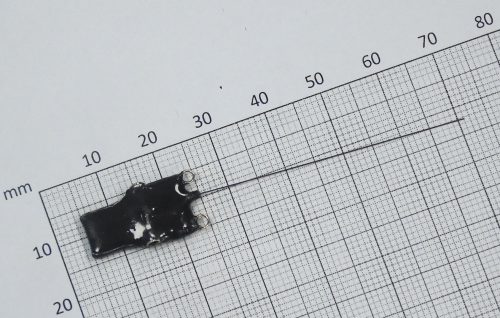
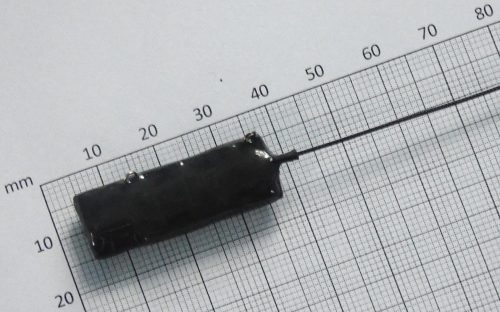
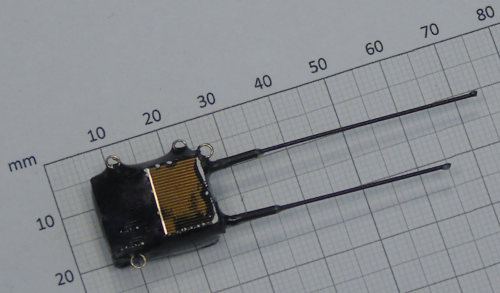
We have successfully developed a range of significantly smaller and lighter weight 4G LTE-M GPS tags. Starting at just 3.9g this represents a near 50% reduction in weight compared with our previous lightest weight GSM tags. Our new compact and lightweight tags allow us to provide the benefits of 4G connectivity to a range of ever smaller terrestrial and seabird species. These power efficient compact tags use our powerful solarPlus technology to provide high volumes of data during long-term deployments. Tags utilising this technology successfully completed field trials on seabirds in the summer of 2026.
Magnetometer
Magnetometer functionality has been enabled across our range of GPS loggers. This new sensor provides valuable movement data by dead-reckoning between GPS points. This makes it ideal for reconstructing movement data during dives and in areas of low GPS signal availability. First customer deployments utilising this technology will be taking place in early 2027
2025 developments
Over the past year we have made significant technological improvements including the development of tags with combined depth and barometric pressure sensors, the development of an ultra small 1.0g tag which captures GPS, immersion, accelerometer and pressure data, the addition of VeDBA accelerometer data across our product range and the development of burrow detection techniques to minimise power wasted in difficult signal conditions. Please see more information about these advancements below.
Combined pressure sensors
An area of key interest to seabird researchers is the measurement of accurate barometric pressure to characterise flight heights. Although many standard barometric pressure sensors can survive operation to depth in saltwater, they do not recover very quickly when they leave the water, resulting in long periods (tens of minutes) when they cannot provide accurate air pressure readings. To address this issue, we have developed a range of tag configurations that use specialist combined depth and barometric pressure sensors. These combined sensors are particularly well suited to deployment on diving seabirds as they can operate at the large pressures experienced when submerged in water, whilst then being able to react instantaneously to provide very precise and accurate air pressure measurements upon surfacing.
Sensor-rich tags from 1.0g
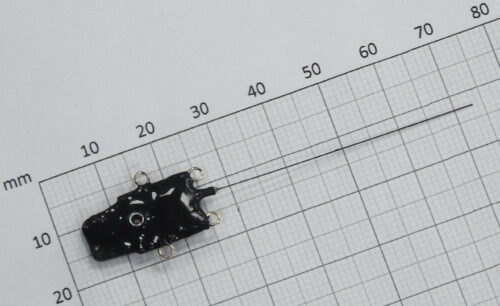
In addition to providing the above range of combined pressure and depth sensors with our standard logger and wireless download tags we have now developed an ultra small and lightweight solution for use on small and medium size seabirds that incorporates such a sensor. As a result we are now able to provide tags for small seabirds that can provide GPS, pressure, immersion and accelerometer data starting at just 1.0g in weight. The sensor that we use is able to provide depth data when submerged (to 30m) and barometric pressure data when above the water. Further details of this new ultra lightweight multi sensor tag, together with examples of other standard depth tag configurations can be found here.
VeDBA
Vectorial Dynamic Body Acceleration (VeDBA) is a well established metric used as a proxy to indicate an animal’s activity level/energy usage. It works by attempting to remove static acceleration due to gravity from acceleration data. The remaining dynamic acceleration is then due to the animal’s movements and behaviour.
Our VeDBA enabled tags sample high rate 3-axis accelerometer data to ensure that high frequency behaviours of the animal are adequately captured. Our onboard VeDBA processing then efficiently condenses this rich data to a much lower rate metric that can be used as a proxy for physical activity and energy expenditure. As VeDBA processing vastly reduces the volume of data that must be transmitted it is the recommended accelerometer configuration to be used with our wireless download UHF and GSM tags.
VeDBA configuration options
There are a number of parameters that can be set when programing our tags to achieve the optimal VeDBA configuration for a given species or project. The raw sampling rate used by the tag can be set to 12.5, 25 or 50Hz to allow a range of behaviour types to be captured. Tags should always be set to use the lowest sampling rate that will capture the behaviours of interest, as this reduces the volume of VeDBA data that is generated and also the power consumed by the tag. Accelerometer time windowing can also be used with our VeDBA option to reduce the volume of data that is generated each day.
Burrow detection
Burrow detection is a special feature of Pathtrack devices that greatly reduces wasted power when tagged individuals are in challenging locations, such as in burrows or on cliff-side nests. In such environments it can be difficult, or even impossible, for the tag to obtain GPS signals that are strong and reliable enough to process. Our burrow detection schemes perform intelligent onboard processing to allow our devices to dynamically manage the programmed device schedule, resulting in typical GPS power savings of 20-25% during incubation or chick rearing stages.
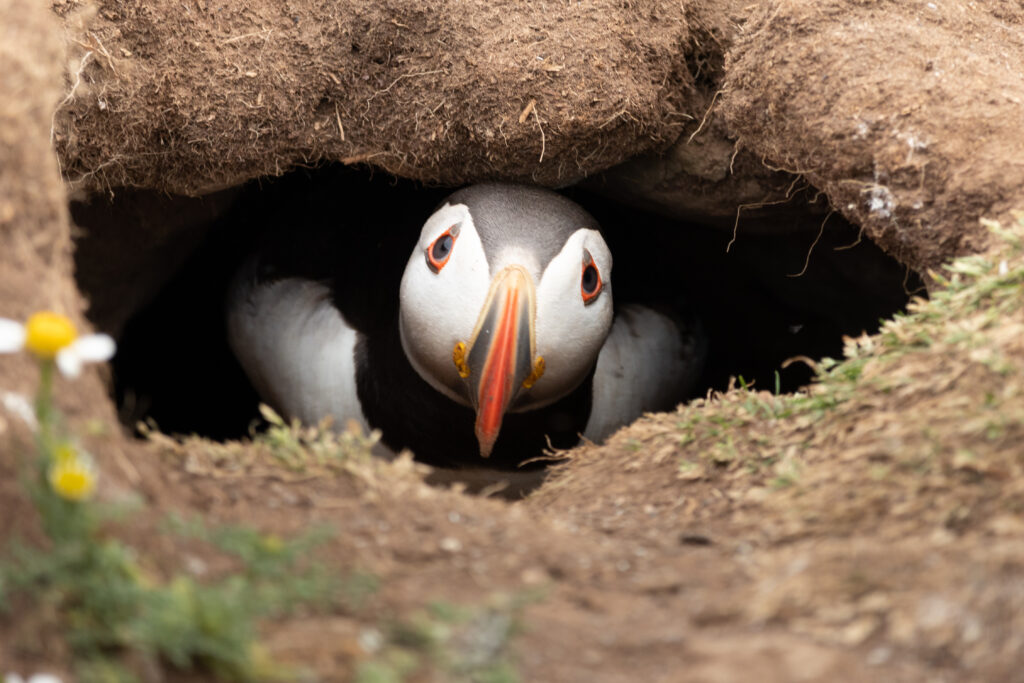
A puffin in a location suitable for Pathtrack burrow detection
Burrow detection options
Burrow detection greatly reduces wasted power by selectively skipping scheduled GPS attempts that are expected to fail due to the bird being in a burrow for a prolonged period of time. The attempts to be skipped are selected using one of the two algorithms outlined below, both of which have been designed to ensure that a statistically insignificant number are skipped when operating outside of the burrow.
Option 1
This is a dynamic algorithm that selects which GPS attempts should be skipped and can be applied to any species on any of our devices. It typically eliminates around 80% of energy waste from in burrow GPS attempts.
Option 2
This algorithm processes a combination of onboard data to select which GPS attempts to skip. For optimal power savings this option needs to be tuned to the behaviour of the species being tracked. Once tuned this option can eliminate around 90% of energy wasted from in burrow GPS attempts, with minimal impact on GPS attempts outside the burrow.
To date this new feature has only been tuned and validated on Storm Petrels. As we provide this option to customers tracking an ever growing variety of species going forwards we will validate and tune it so as to provide this option on as many species as possible.
Technology
Our Products
We have a wide variety of devices available, all of which have unique capabilities and characteristics. Please click on the variants below for detailed technical specifications.