
Product Overview
Starting with depth sensors our picoFix® GPS data loggers, as well as our picoFix® GPS tags with wireless download, can now be fitted with small lightweight devices for measuring depth. Sample rates of up to 1Hz, together with configurable depth logging thresholds, can be set to provide the optimal data capture for a given species and deployment period.
Our standard size GPS data loggers are now supplied with extra large memory to enable capture of high volumes of depth, GPS and also 3-axis accelerometer data. Tags with this extra large memory capability can be provided starting at a weight of just 2.3g.
Our GPS tags with UHF download, including our Mini GPS tags with UHF download, can similarly be configured to provide the optimal sampling schemes for GPS and depth data. A key consideration when configuring such depth-equipped tags with wireless download is the volume of data likely to be generated by the sensor, and the time and power required to offload that extra data to the base station. We work with customers to ensure that feasible data capture settings are identified for use in a particular scenario.
To provide an indication of the impact that wireless transmission of depth data has on battery capacity we have generated 6 example tables (A to F) for the 6 most common battery sizes used in our tags. For each depth-enabled tag configuration listed on a given species page the applicable table is indicated, allowing an initial assessment to be made as to the overall GPS and depth data achievable with a given depth-enabled tag with wireless download.
Turning to air pressure sensors, this is an area of key interest to seabird researchers wishing to characterise flight heights. Although many standard barometric pressure sensors can survive operation to depth in saltwater, they do not recover very quickly when they leave the water, resulting in long periods (tens of minutes) when they cannot provide accurate air pressure readings. To address this issue, we have developed a range of tag configurations that use specialist combined depth and barometric pressure sensors. These combined sensors are particularly well suited to deployment on diving seabirds as they can operate at the large pressures experienced when submerged in water, whilst then being able to react instantaneously to provide very precise and accurate air pressure measurements upon surfacing.
In addition to providing this range of combined pressure and depth sensors with our standard logger tags we have now developed an ultra small and lightweight solution for use on small and medium size seabirds that incorporates such a sensor. As a result we are now able to provide tags for small seabirds that can provide GPS, pressure, immersion and accelerometer data starting at just 1.05g in weight. The sensor that we use is able to provide depth data when submerged (to 30m) and barometric pressure data when above the water. We have also provided wireless download tags with combined pressure and depth sensors and will soon be releasing these configurations.
Tag Specification
| Minimum weight | From 1.05g (In air pressure and combined pressure configuration) |
| Minimum dimensions | Starting at 19x11x4.5mm plus ~50mm external whip antenna. |
| Depth recording | Depth and temperature data sensor available with variants rated up to 290m Configurable sample rate and depth threshold |
| Depth resolution | Depth resolution of 0.2 to 0.5m depending on operational mode |
| Temperature data | Temperature recording also available, resolution up to 0.5C depending on operational mode |
| Accelerometer | Logger tags can provide GPS centred burst or continuous 3-axis accelerometer data capture at rates of 1Hz, 12.5Hz, 25Hz or 50Hz. They can also provide VeDBA data. UHF download tags can provide GPS centred burst 3-axis accelerometer data capture as well as VeDBA data capture. |
| Onboard storage | At least 10000 GPS location attempts, 400000 for standard GPS loggers. Remaining memory on tags used for depth and accelerometer data (if applicable). For example: Storage for continuous 3-axis accelerometer data @12.5Hz and 0.5Hz depth data for 55 days for the standard GPS logger and 3.5 days for the Mini GPS logger GPS tag with UHF download: 40000 GPS location attempts Remaining memory reserved for depth data |
Key product variants
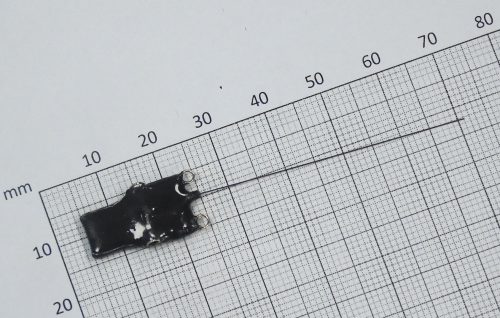
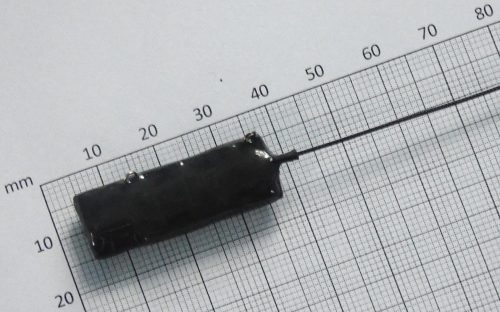
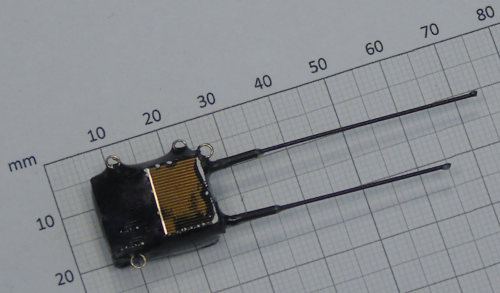
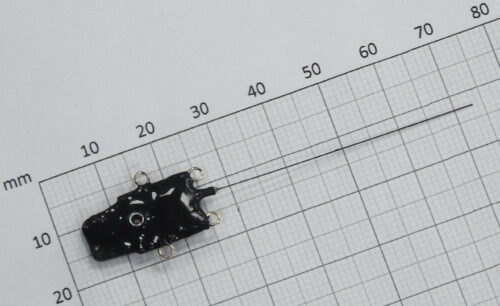
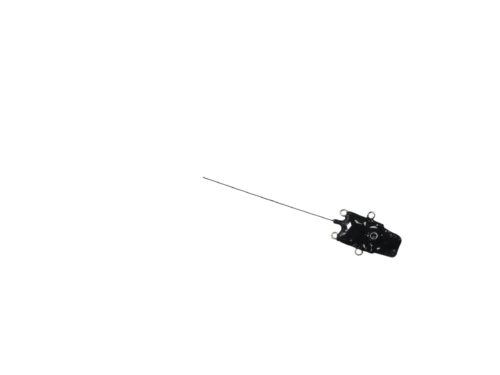
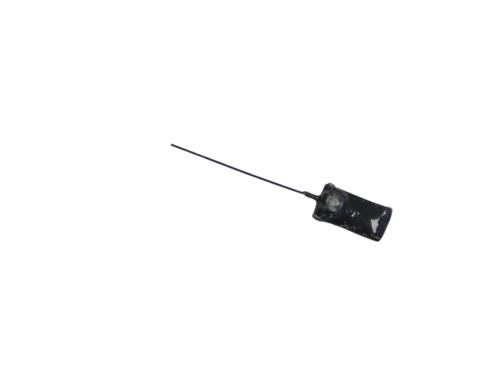
Please click on the images below for examples of products with the following features.
Technology
Our Products
We have a wide variety of devices available, all of which have unique capabilities and characteristics. Please click on the variants below for detailed technical specifications.